Monday, February 14, 2011

Freight Train Simulator Games Online

From the sinking of a small business: 30 years ago the railway arches were at the railway road opened


The 30th and 31 January is in my calendar painted red, "says family researcher Bärbel eater. That this is so has to do with the story of her family. Because at 30 and 31 January 1981, the business of their parents at the railway arch 19 was torn down. This demolition was 30 years ago, a long business tradition under the railway arches on the railway road to the end. For when Gerhard Esser in 1955 his business there for fishing and camping supplies opened, he was not the only businessman who was among the 1865 built and opened in 1866 as a railway line in operation railway arches his quarters.
His daughter was born in 1961 remembers not only a legendary chip shop, an ice cream shop and the extinguishing arc of that time was really under the railway arch and more consumption on the beer and the traditional local pub, the market people.


As Esser was a child, her neighbors were acting under the railway arches, for example, leather goods, fruits and vegetables, clothes and food or money they earned their money as the repair of bicycles.


If you look at the colorful mix of industries under the railway arches and see how the railway arches look like today, one wonders in retrospect as to why in the 70's had the idea to open the railway arches and demolish the resident businesses, homes and warehouses . "It was then the opinion that the railway arches represent their shops a traffic-retardant structure," says Esser believed in progress and the car-friendly spirit of the 70s. "The driving force behind the project was the then mayor and Planning Committee Chairman Gerd Müller," the present city spokesman Volker Wiebel, whose parents remembered as enthusiastic campers were among the regular customers of family eater.

took the one year before the opening of the sheets 1980 with their annual Straße. Those who recognize considered the old pictures of the busy railway arches on some of the shops and living rooms.


you could save on the railway line live at all without being deaf? "Our 50 to 60 square meters large house was well insulated and removed," said Esser remembers her childhood under the railway bridge. The vibrations of the trains took them and their parents, as opposed to guests no longer true. And even their teachers who are convinced of it at a home visit, that you could make under the railway arch and total peace and homework, marveled at the relatively high living comfort.
In her research is Essers to an article from the Mülheim General Anzeiger of 24 July 1905 struck, that shows that you thought was already on the opening of the railway arches. There is to be read in part: "In the previous long time ago by the columns of various newspapers controversy concerning the transformation of the local railway station conditions was the transfer of the Rhenish Railway and called for the sake of beautifying the city through the removal of the railway bridge and the railway embankment."


documented early as 1890 A newspaper report of a business fire at the railway arches, the buzz in this town on the outskirts of town hall and watch market. And 1954 described the NRZ (see box), the resurrection of the mall under the railway arches. Yet emerged in the 1970s, when the Rhine-Ruhr-center and the City Center's first shopping centers and at the Castle Street is a pedestrian zone, this old business district appeared on the railway to remain literally at the track and was run over by the train of events to be . The opening of the railway arches that you wanted aufhübschen with vines, trees and flower boxes, we understand that time as part of the inner city renewal, in the course were also the railway road and its old-time Founder houses restored, rebuilt and renewed. After the opening of the railway arches 1982/83 railway tracks for today's tram line 102 were deployed in the meantime, however, goes underground for 13 years by the Ruhr Tunnel. In the 90 years was discussed again whether they could not revive the railway arches back with stores and apartments. This can be rejected but for cost reasons.


Klaus Beisiegel, who works as a consultant in charge of the issue Baudezernentin Ruhrbania can remember in this context, consider proposals, the railway arches as an art and cultural spaces to use. As part of the Ruhr Promenade construction area 3, there are, according to Beisiegel, plans a residential building next to the railway arches to grow, so that this house could be entered through the arches, while the old railway line then the cycling and walking would.


In April 1954 writes the Mülheim NRZ.. "The ugly arches of the railway embankment in the rail road seem to be decorated now pretty The first one, handicraft shop Gwendolyn Bushman It is intended under the archway 23, a pretty shop one. The city is once again very interested to create a so-called mall. Although the railway arches be used since a long time, they give off as sheds and garages not a pleasant picture. That it may create a favorable image for the city embankment front is to prove now. And will have also found imitators, so that maybe sooner or later the ugly face of the embankment completely transform. "


This article was published on 31 January 2011 in the NRZ

Sunday, February 13, 2011

Does Implantaton Bleeding Have Clear Tissue

Quo vadis Stadkirche? Quo vadis the Priesthood: A Conversation with Manfred Mülheims honor city dean of Schwartzenberg, the priest since 1971


The Catholic Church seeks it, but finds it increasingly rare in this country priest. In the last year in the Ruhr diocese only one priest was ordained. In 2011 it will be just two. honor city Dechant Manfred von Schwartzenberg was ordained a priest 40 years ago. For the NRZ I spoke to him about the sun and shade in a profession that is left for him today calling and dream job.


Was the priesthood has always been your dream job?
No. I wanted to be the first theater scholar and director, have stimulated by the example of two teachers, who played with us theater and creative things done.


Then why are you still become a priest?
The Tick of the Holy Spirit came to me by the said teachers and two priests, who I met in Essen, Münster. These were people I do not only as a pious, but also as a creative experienced and encouraged me that I could have a piece of me in vocation. This feeling is then reinforced during my studies, in which I could also build a chorus of new liturgical music.


What inspired you for your job?
be complex. I also would not say in retrospect that I had been a very religious man, whose principal benefit would have found in prayer and meditation. I have always been a pleasure, I can turn to people and help them, but to share with them the joy of the faith and to celebrate.


What makes a good priest?
The most important thing that one takes time for people and listening to them. It does them good and makes me happy, even if one of the suffering with which we are confronted as a priest, often can not change much.


1971 to be something you have, how experienced optimism?
We had a tremendous self-confidence. Our study also began the implementation of the Second Vatican Council, which provided for a renewal of the church. "Walk your way through new thinking." This time Paul's word was on everyone's lips.


you experience your church today in the crash?
We in our community is preparing a pastoral plan in which we also consider how church life can be organized in the future. At present, we feel no distress, because we have a pastor for each congregation. But in five years will look like the already different in 20 years there will be in Mülheim only one parish, St. Mary gather birth, in which all Catholic Christians. We will have less faithful and therefore also less full-time staff, fewer churches and community centers.


you frustrated by that prospect?
We must view the situation realistically, to avoid false expectations and awaken to generate frustration. My life principle is in new situations time and again to find new answers. You may not want your head against the wall. Because it breaks only the head.

What does this mean for the church of the future?
The Church of the future will be quite different from today. We can not be everywhere have a pastor and a church. Lay people are going through a learning process and take the future even more senior positions in the church. Then the congregation will probably take communion for a sick neighbor and it will establish itself, perhaps even more private and home Bible studies. Many new forms of Church are possible and necessary, without which one could say today, as these forms look like.


would the abolition of compulsory celibacy resolve the shortage of priests?
There certainly are many priests who take the celibacy of celibacy will not in itself, but because they mean the priesthood and the assistance of the church something. The Church in Germany, it would certainly help if you also permits married men who do this, access to the priesthood. Why not? But that would have consequences for the world church. And the hook in it. But I also believe that celibacy is not essential for this is that feel today appointed only a few men to the priesthood. Previously, candidates for the priesthood taken much more of the company and had not put up with the question: "Are you crazy" The young men, but still today priests are often very pious and worthy to be priests.


Why is it then to cases of abuse and sexual lapses of Catholic priests?
The greatest danger I see in solitude, when a priest in his church is not recognized, but feels isolated and misunderstood. Then there is the risk that he is looking for recognition elsewhere and in extreme cases can drift into criminal aberrations that lead to such abuse. But it is often the case that such priests seek recognition in a partnership and then to give up celibacy and its Office.


Biography: who grew up in Essen Manfred von Schwartzenberg (66) was in his theology and philosophy in Münster, Bonn and Bochum 15 Ruhr in January 1971 from the first bishop in St. Engelbert Franz Hengsbach ordained a priest. After initial years of Kaplan in Gelsenkirchen, he came in 1976 as a chaplain and youth minister for the first time after town Mülheim, where he worked until 1982 in the town of St. Mary Rosary, as for ten years before he Military chaplains to the Federal Army moved. But in 1992 he returned as pastor of St. Barbara to Mülheim and, in 1993, for 15 years, the Office of the City of deans. Since 2006 he has been at the forefront of the new North Parish of St. Barbara, which along with St. Barbara (Dümpten), the communities of St. Mary Rosary (Styrum), Christ the King (Winkhausen) and St. Engelbert (Eppinghofen) with a total nearly 20 000 person belong. 2008 of Schwartzenberg appointed honorary dean city and awarded the following year for his services as chaplain with the Santa Claus United Medal. He wrote the libretto for a musical about the 1945 resistance fighters assassinated Nicholas Gross, which since 1998 by parishioners of St. Barbara, almost 60 times has been performed.


This text was published on 29 January 2011 in the NRZ

Saturday, February 5, 2011

Rikers Island Days For Visits

A look outside the box to Latin America: An interview with the Brazilian Bishop Alfredo Schaffler
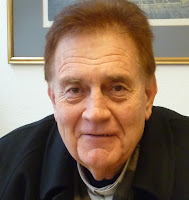


The longtime auxiliary bishop and former chairman of Adveniat, Franz Grave uses his spiritual retired as pastor in the parish of St. Mary Mülheimer birth. But his long-standing ties to Latin America, which he knows from personal experience, has the 78-year-old theologian is not lost and that is why in December 2010 the Brazilian Bishop Alfredo Schaffler (photo) to a Latin America Week invited to the Ruhr diocese. At a retreat in the parish of St. Mary Mülheimer birth searched priests and lay people to talk to Schaffler, to get ideas for their own community work. The Tagesspost for the Brazilian Bishops met on this occasion for an interview and got to know a man of God who does not tell us much about Latin America.


How to become an Austrian bishop in Brazil?
I ended up on television in Brazil. You see: Television has its good side. There I saw speak at the Second Vatican Council, a Brazilian bishop and heard by 16 from Austria went to Brazil and there was a priest. The time has brought me from my European peace. That was the reason why I have my life turned upside down and started again. Thus, even after my studies in Brazil priest and later bishop.


What you take from your visit to the Ruhr diocese with to Brazil?
gratitude, joy and conviction that the world has become a global village in which we must move closer together, where we also learn from each other and live together as brothers and sisters, if we listen to each other.


What have you learned here itself?
There is so much positive in Germany, which has grown over centuries of Christian proclamation and now finds the fundamental idea in economics, in politics or in school. But I have also met many committed community members get involved because they recognize that the church is not all priests and all of us as believers in a ship, are all in place.


But church without a priest does not and we have here, in contrast to Brazil for a priest shortage.

The lack of priests is certainly a sign of God. He will lead us, perhaps meaning that we more strongly by the Baptism go to every believer, making their contribution that the Church is always a lively, foot-washing Church, which is perceived as a sign of hope for the people in which we learn through the church again and again that we are brothers and sisters in a world can live together.

can learn what the Catholic Church in Brazil and Latin America from the Church in Germany and vice versa?
It is not for me to say what the German church can learn from us. But what can we learn from the church in Germany, which are many elements. I am thinking of the good organization that you have here. We can by the thoroughness , With which one might learn a thing and she continues convincing. But we can learn from the openness of the people of our world. How many people here have learned over the decades to see beyond borders and to identify horizons. As a member of the Episcopal Conference of Brazil, I can only be grateful. For what would our church in Brazil and in Latin America without standing behind the many Catholics in Germany, by Adveniat, Miserior or other actions. We were certainly not the Church that we are today. We are certainly not just a holy, but also a sinful church. But we can certainly put a lot of signs of holiness, hope and change, because We have heard from the background of the action Adveniat in 50 years a lot of help. For this, we feel deep gratitude. And that was another reason for me to accept the invitation to say thank you. This is a bridge which has been hit. But a bridge is supported only by pillars. And that is a pillar Franz Grave. Such columns are also the two priests from the Diocese of dysentery, which act today blessing in my diocese through their efforts at persuasion.


you referred to your visit but also successfully for funding in the cistern tree in your diocese. Why?
We live in a very dry area in which there are six Months of the year is not raining and the people can not just turn on the tap to drink water. But what is life. So we build cisterns, that we can collect rain water to families in the dry months of rain water have, they can use to wash, drink and cook. For 400 € you can already build a cistern, which collects about 15,000 liters of rain water. That means that by the people of the dry season and not withdraw into the cities or even leave their country must. You can stay to raise their children and to work their land. That is life. Of course, we also have social centers, in which we take in children whose At home, the street is where we give sewing and cooking classes to show the people, for example, how to create a vegetable garden. For what it receives with one hand, the pass must be with the other hand, in order to give people hope.


assess how you as a Catholic bishop, the relationship between church and state in Brazil, the now divorced from his office socialist President Lula?
The relationship between church and state is a relatively peaceful. It seeks dialogue and the Episcopal Conference is listened to with much respect by the President. But unfortunately, it is then often it is not and into reality.

made last inhumane conditions in prisons Brazil headlines. How is the situation of human rights in Brazil?
I was ten months in a detention center. There sat a 158 men. Of those, 60 percent younger than 25 and only 30 convicted. The others awaiting trial. This can often take years, even if innocent people. Including innocent people often lose two or three years of her life in which they have nothing positive can learn to their lives. This is against human rights. And here we see the present government not much progress, because it lacks core values. I mean honesty and truthfulness. We have not much fraud and corruption. And as long as lie is often told, until it is sold as truth.


What do you expect from the successor to Lula, Dilma Rousseff?
As Church we must always be a hopeful church to give hope. And we hope that as a woman may have a greater sensitivity to bring their employees to act, so it is for example in the health system better. What is on paper, to be implemented, namely, that the poor fellow has the opportunity to obtain medical treatment that improves the education system and we have less illiterate. We have less corruption and is badly shattered, with more honesty and there is less embezzlement. This is what we expect.

try to respond as the Catholic Church in Latin America to the challenge of the evangelical sects?
The fifth Latin American Episcopal Conference has given an impetus for us something more to be a missionary church. We must not become accustomed to church. Because if you get used to something, there is a danger that one is asleep. And the Church can not sleep. Evangelization was with us often superficial. The heart is one of the Brazilian Jesus Christ, but of the head that comes first and we were not always because we are not always drawn out with missionary enthusiasm. We have in Brazil, but also a Constitution that grants tax exemption for all religious communities, but not exactly define what a religious community. And so, each open at the next street corner, the Church of the blue eyes of God to hide his taxes behind. For most cults are a purely financial company and we can counter only, in which we more strongly to be a missionary church.

How do you assess the situation of the Catholic Church in Latin American countries, like Venezuela, being ruled by a regime neosozialistischen and where there is a front line between church and government?
In Brazil we have now, after many years of a concordat, in which the legal relationship between church and start is defined. What we hear on the Latin American level, by people who come there, since then the economic situation in Venezuela very poor and the poverty in size. This is a socialist system in which President Chavez is often harassment and violence, the existing concordat with feet. Although this is an international agreement, but he does it with other countries. For us this is of course a concern that such a man to have in the government, the courting supporters, but also not as popular. Since we are closer as a church there in the people because you realize: There is indeed much talk, but the reality is different. For the Church this is a difficult situation. Because there is virtually no opposition. All messages will be checked. Democracy is violated. Because democracy is freedom of speech and will not be accepted. And in this regard, it has also some trends in Brazil. The future President has now said: The noise on the street is better than the silence of the dictatorship. She herself has suffered under a dictatorship. We hope that through it keeps its word, too. But there are some trends that we have that you want to curtail freedom of expression and control the communications. This makes us worry.


How important from your point of view of the alternative Nobel prize for your fellow Brazilian bishop of the Diocese of Xingu, Erwin Krautler, which is so committed to the conservation of tropical rainforests and the rights of the Indians?
This award is important for him so that his word may be heard more. Specifically: for trying in his area to build a huge dam. This is now done, although he has promised the president that it is not done. The result: there are 30,000 people through the water driven from their homes. And since there is no plan what to do with these people. As he stands up and asks: Can one agree? This he has done in a peaceful manner. The companies that make this building and are interested in seeing him, of course, not you. He has to go with police escort. You have to remember. In the flooded areas live Indian tribes, for whom it is important to live where their ancestors are buried. If they were evicted from their land, which would in their minds a similar extinction of their tribe. And on the other hand stands the Bishop Kräutler. But unfortunately he is not, despite all promises to the public authorities of Brazil heard.


Biography: Alfredo Schaffler was born in 1941 in the Austrian Forest Farm and is a compatriot of his coming also from Austria, Brazil bishop colleagues Erwin Kräutler, now for his commitment to the rights of the Indians and the preservation of tropical rain forests been awarded the Alternative Nobel Prize.
After his secondary school was Schaffler 1955 to Vienna to join the Congregation of Christian Brothers. From 1963 to 1966 he worked as a religious teacher and educator in Feldkirch. Then he decided to leave Austria to work as a priest in Brazil. After his ordination in 1966 he was first in the Brazilian Diocese of Picos worked before he went in 1978 for a church law graduate studies in Rome.
Back in Brazil, took over the task of a bishop's vicar Schaffler for Economic Affairs and was also active as a priest in Teresina. Since 1985 he heads the established in 1944 and 20 500 square-mile diocese Parnaiba in northeastern Brazil. Here live some 550,000 people, of which about 80 percent are Catholic, six percent more than the Brazilian national average.


The Catholic newspaper THE DAILY MAIL has published in January 2011, a shortened version of that conversation. For more information, visit: www.the- tagespost.de and : www.adveniat.de